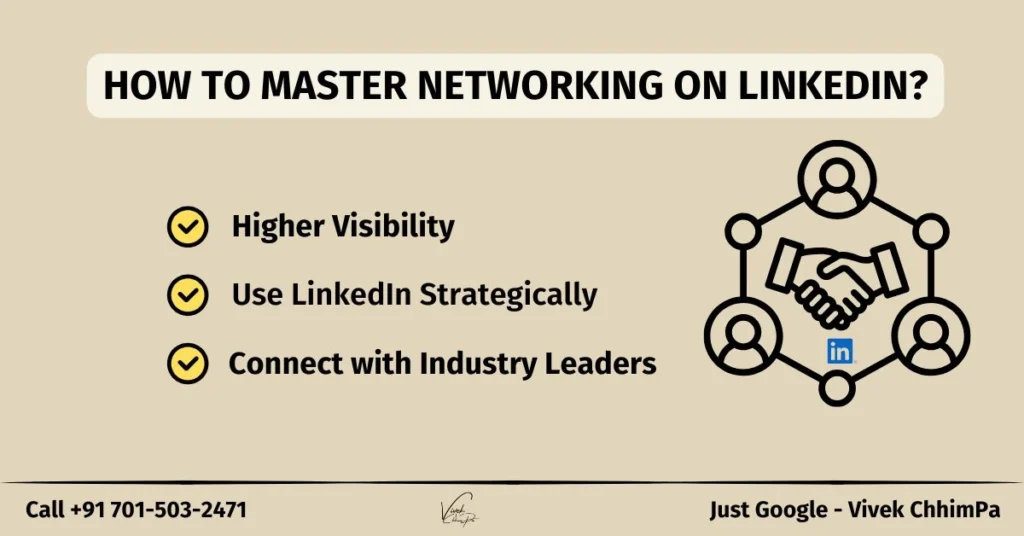
Within the digital environment, LinkedIn has a distinct psychological and professional niche. It’s not quite Facebook or Twitter, but it’s also not exactly a static CV. It is a publishing powerhouse, a worldwide networking center, and an active professional directory all combined into one. However, lots of professionals use LinkedIn on a daily basis, challenge blank connection requests, make occasional updates, and question why their careers aren’t progressing.
The plain reality is that networking on LinkedIn is not a numbers game, but instead an intentional plan. You need a systematic blueprint whether you’re trying to learn how to network on LinkedIn, become an expert in professional networking on LinkedIn best practices, or learn the keys to making connections on LinkedIn that result in job opportunities, client contracts, or strategic partnerships.
As a LinkedIn growth specialist, I’ve spent years examining what functions well, what doesn’t, and what actually generates return on investment on this platform. We will delve deeply into the precise architecture required to establish your network, establish yourself as an expert, and use LinkedIn networking techniques for sustained success in this extensive tutorial.
Complete Your Profile First (Your Credibility Foundation)
One unavoidable social selling and networking guideline must be understood before you send out a single connection request or release your first piece of content: Your profile serves as a landing page.
People automatically click on your name and look up your credentials when you communicate with them online. Your networking efforts will come to a complete standstill if your profile seems to be an empty digital void. It must provide an immediate narrative about your identity, the people you assist, and the value you add.
To help you audit and optimize your online presence, let’s break down the core components of a high-converting profile.
Key LinkedIn Profile Sections and Their Impact
| Profile Section | Primary Contribution | Impact on Professional Presence |
| Profile Picture | Establishes credibility and approachability | Increases connection request acceptance and initial trust |
| Headline | Communicates expertise and value proposition | Improves search visibility and immediate understanding of your role |
| About/Summary | Narrates professional story, passions, and career goals | Provides depth, personality, and unique value proposition |
| Experience | Details responsibilities, quantifiable achievements, and impact | Showcases professional growth and problem-solving abilities |
| Skills & Endorsements | Validates competencies through peer recognition | Boosts credibility and confirms expertise |
| Recommendations | Offers powerful testimonials from professional contacts | Builds social proof and reinforces work ethic |
| Education | Presents academic qualifications and commitment to learning | Completes professional background and demonstrates development |
| Volunteer/Projects | Highlights transferable skills, initiative, and passions | Adds depth, personality, and leadership qualities |
Make sure your title and summary include keywords such as professional networking on LinkedIn, LinkedIn networking, and your area of expertise. This ensures that your profile will appear at the top of the results when colleagues search for talent or guidance.
How to Network on LinkedIn? – Moving Beyond Random Invites
Many people make the costly error of using LinkedIn as a cold calling directory, sending hundreds of strangers generic automated messages. Account limits and poor acceptance rates are typically the outcome of this.
Instead, become proficient in these fundamental methods:
Add a Contextual Note to Every Connection Request
- Click “Connect,” and always choose “Add a note.” Make sure your message is polite, concise, and completely free of any direct sales pitch.
- For instance: “Hello [Name], I found your latest insights on business developments and truly valued your viewpoint. I’d love to connect with you and keep up with your updates as I’m also active in this area.”
- Because it shows human purpose rather than bot-driven automation, this little step significantly raises your approval rate.
Leverage “Open to Work” and Inbound Signals Wisely
- Make sure your profile signals are clear and obvious if you are actively looking for freelancing clients or new professional prospects.
- Make use of LinkedIn’s built-in framing tools to convey your objectives to potential partners or recruiters without coming across as pushy.
- To make people come to you organically, combine this with a content strategy that showcases your expertise.
Engage Reasonably and Consistently
- Networking is a two-way street. If you don’t engage with people’s content, you can’t expect them to care about it or welcome your approach.
- Engage with the content that your target network posts for fifteen to twenty minutes every day. Post insightful remarks that are insightful, provide a different viewpoint or encourage more conversation.
- Decision-makers will recognize your name long before you ever appear in their direct communications if you do this regularly.
Advanced Search and Best Practices for Precision Networking
- If you want to scale your network efficiently, stop relying on random profile suggestions.
- You need to use advanced platform capabilities.
Utilizing Professional Networking LinkedIn Search Best Practices
The majority of LinkedIn users don’t take advantage of the company’s powerful internal search engine. You can find the perfect connection by combining Boolean operators (AND, OR, NOT) with filters like geography, present employer, industry, and previous school.
- Finding LinkedIn profiles for networking can be done properly by searching for second-degree relationships. These are people with whom you have similar connections, thereby providing you with an instant conduit for a cordial introduction.
- Targeted Outreach: Sort profiles based on experts who frequently post or leave comments on content related to your niche. Compared to dormant accounts, these active users are considerably more likely to reply to messages and connection requests.
Adhering to Professional Networking on LinkedIn Etiquette
- Online etiquette is just as important as it is in a corporate boardroom.
- Never pitch on connection: It’s basic manners to wait till someone grants your request before attempting to offer them a product or service. Establish rapport first.
- Respect boundaries: Give someone some time if they don’t respond to your communication. Do not follow up with them more than once in a 24-hour period.
- Give before you take: Offer resources, suggest peers based on their abilities, and support coworkers without anticipating a quick favor in return. In digital networking, karma is very important.
Skills, Endorsements, and Recommendations as Social Proof
This is where the strategic use of abilities, suggestions, and endorsements is useful.
- Curating Your Best Skills: At the top of your skills section, pin your top three key skills. These should be closely related to the terms you want to be recognized for, such as career counseling, corporate training, or SEO strategy.
- Power of Endorsements: Give your coworkers, clients, and professional peers regular recommendations for abilities you have actually seen them use. Reciprocity frequently takes over, and they will recommend you in return, strengthening the power of your profile.
- Securing Recommendations: A remarkable testimonial that is integrated into your profile serves as constant social evidence, eliminating any reluctance on the part of anyone assessing your profile for potential future tasks.
Sharing Valuable Content to Attract Your Network
Inbound pull marketing is the ultimate trick for LinkedIn networking strategies. Build an ecosystem where people want to connect with you rather than exhaustively searching for every relationship. Putting fundamental LinkedIn networking advice into practice entails posting informative, entertaining, or motivational content. Pay attention to these content types:
- Document Carousels/PDFs: Break down step-by-step guides, frameworks, or case studies into swipeable document posts. These consistently drive high engagement and saves.
- Personal Stories and Lessons: Share your professional journey, the mistakes you’ve made, and the lessons you’ve learned. Human-centric storytelling builds immediate emotional rapport.
- Thought-Provoking Polls: Ask industry-specific questions to gauge opinions and spark active conversations in the comments section.
Your profile views soar, your inbound connection requests naturally rise, and your professional impact builds over time when your material continuously adds value.
Playing the Long Game on LinkedIn
You may turn LinkedIn from a passive resume holder into an active growth engine by improving your profile structure, using smart outreach strategies, leveraging advanced search filters in a responsible manner, and regularly providing insightful content.
Keep in mind that every job title, business name, and profile image represents a genuine person. Be genuinely curious, driven to help others achieve, and dedicated to professional excellence as you approach networking.
Put these tactics into practice right now, maintain consistency in your outreach, and observe how your professional network opens doors you were unaware even existed.