SEO Full Form – Search Engine Optimization
It’s not easy to get your website to rank highly in search engine rankings. You will face many challenges. First of all, there is intense competition. Numerous websites are using their own SEO strategies to compete for those top positions.
When it comes to the internet, SEO is similar to a compass that directs users to your website.
In essence, it’s a collection of techniques and tactics used by websites to rank highly when you search for anything on Google or other search engines.
Understanding SEO strategies is necessary if you want to rank your brand or business. You must be aware of the keywords that users are typing into search engines and integrate those terms into the content of your website. It’s similar to communicating in a language that your audience can understand.
Because the internet is a busy space, this is important. You usually click on the top results when you search for something on Google, don’t you? This is when SEO’s magic comes into play. It raises your website’s ranking and increases the likelihood that visitors will see and click on it. In other words, SEO is like a digital spotlight that shines on your website, increasing its visibility and accessibility for a wider audience.
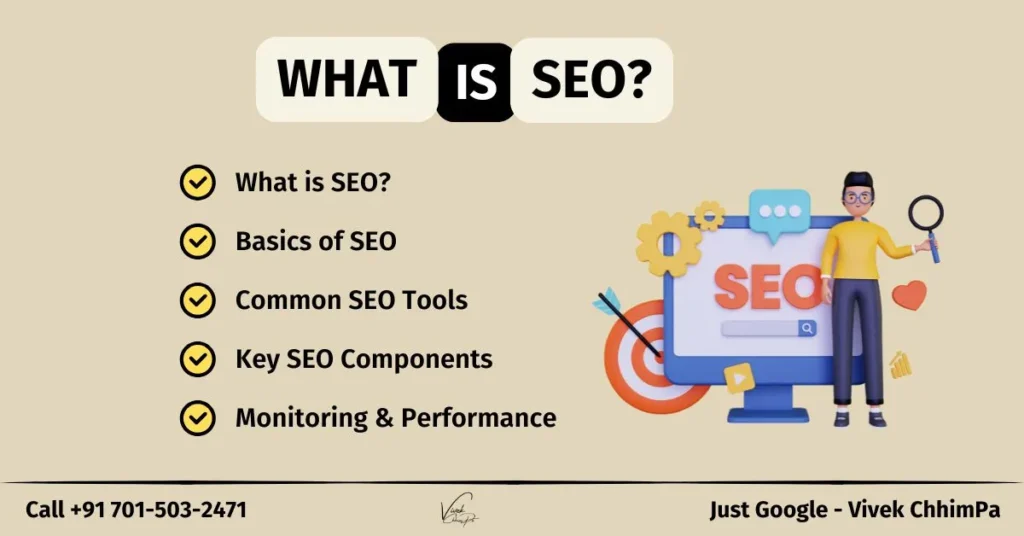
What is SEO?
SEO is a set of strategies used to enhance a website’s ranking in search engines, including Google, Bing, and Yahoo. The main objective is to boost organic (non-paid) traffic by improving a website’s user and search engine appeal. Increased potential revenue, better brand recognition, and more visitors are all possible outcomes of high search rankings. Additionally, SEO guarantees that users quickly locate legitimate, pertinent, and helpful information.
Basics of SEO & Key Components
Making your website friendly and engaging to search engines like Google, Bing is the goal of SEO, or search engine optimization.
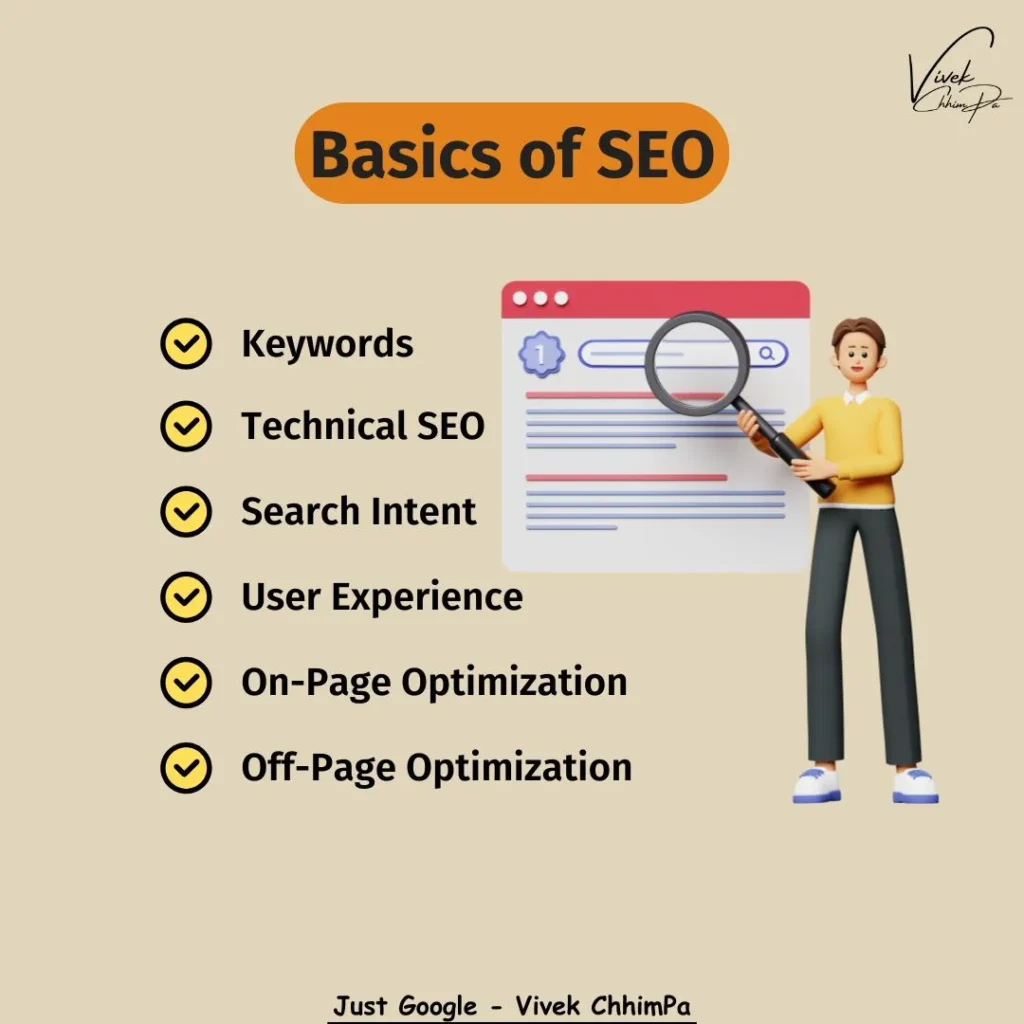
You must focus on these key components of SEO, which are as follows:
Keywords
The words and phrases users use to look up information online are known as keywords. It is your responsibility to determine which keywords are relevant to your content and organically use them, also focusing on relevance in terms of your products or services.
On-Page Optimization
This involves implementing changes to your website’s content, meta tags, and headings.
Off-Page Optimization
This describes events that take place outside of your website, mostly backlinks. Similar to recommendations from other websites are backlinks. Search engines will trust your website more if it is recommended by trustworthy websites.
Technical SEO
The work done behind the scenes to make sure your website runs quickly and is mobile-friendly is known as technical SEO.
Search Intent
When someone types a query into a search engine, their main objective is referred to as search intent (sometimes called user intent or keyword intent). “Why is this user searching, and what do they expect to find?” is the core question that it addresses. Since search engines like Google prioritize providing the most relevant results to meet user demands, understanding search intent is essential for efficient SEO and content marketing.
User Experience
The term “user experience” (UX) describes the general impressions and feelings that a person has after utilizing a particular system, product, or service. To make interactions simple, effective, and pleasurable, it covers every touchpoint a consumer has with a business and its products, from initial discovery and purchase to usage and even troubleshooting.
Your website must load fast, be mobile-friendly, and be simple to use. People will leave if it’s slow or challenging.
Tools & Approaches for Monitoring and Improving SEO Performance
In the world of SEO, you have many tools and methods to monitor and improve the performance of your website. Monitoring and improving SEO performance effectively requires a combination of reliable tools, tracking important metrics, and putting continuous optimization techniques into practice.
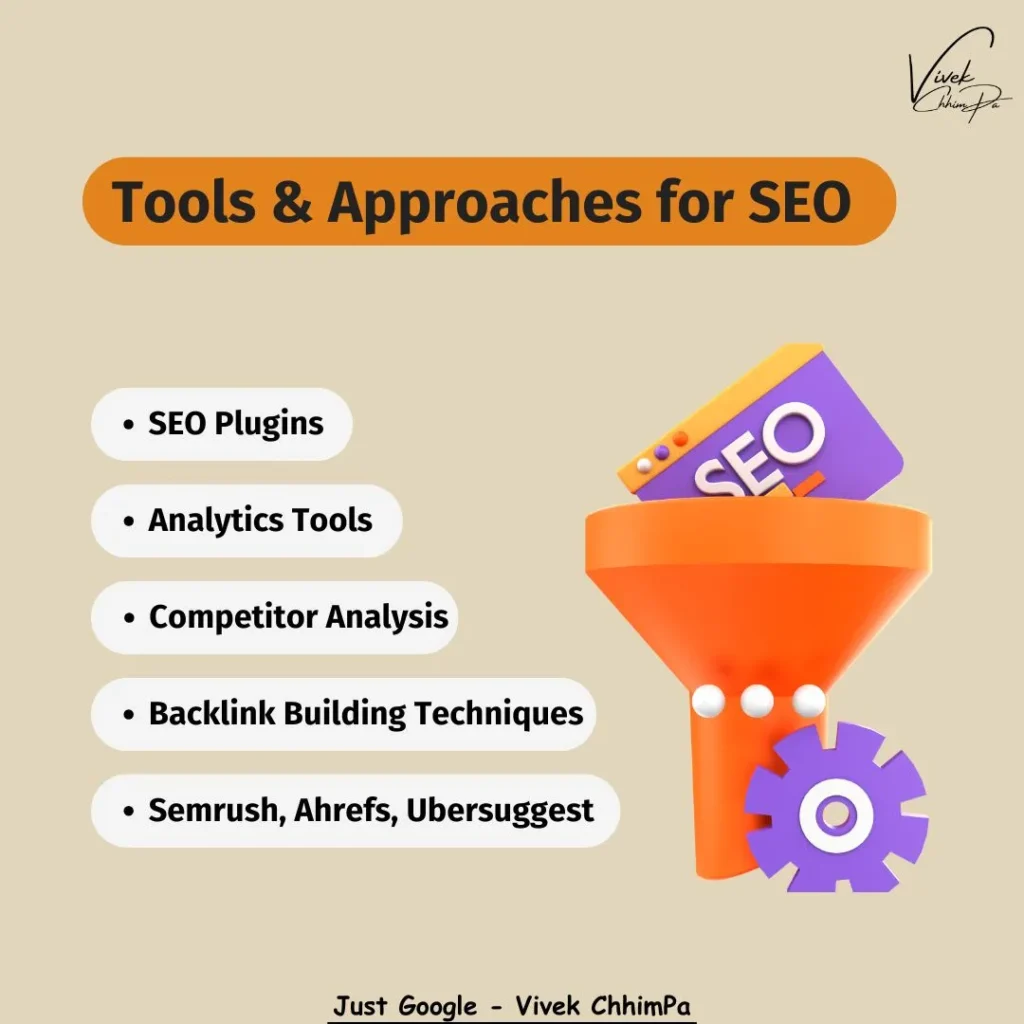
Generally speaking, there are two types of SEO tools: complete commercial “all-in-one” solutions and free “first-party” data from Google.
Tools for Keyword Research
For keyword research, a variety of tools are accessible, ranging from extensive, costly suites for experts to free, beginner-friendly choices. Google Keyword Planner, Semrush, Ahrefs, Ubersuggest, and AnswerThePublic are among the most widely used and useful tools. These tools help you in identifying the right search terms to focus on.
Analytics Tools
They give you data on how visitors are using your website. You may view the most popular sites, the origin of visitors, and their duration of stay.
SEO Plugins
Some plugins can assist you with SEO if you depend on platforms such as WordPress. They enable you to optimize your sites and content.
Competitor Analysis
The practice of assessing the organic search tactics, advantages, and disadvantages of other websites competing for the same keywords and target audience as your own is known as SEO competition analysis. Gaining data-driven insights to hone your own approach, spot possibilities, and eventually raise your search ranks is the aim.
You can observe what content works for them, what keywords they are focusing on, and how you may improve.
Backlink Building Techniques
Developing connections with other websites can enhance your SEO, just as networking with other chefs can help you become a better chef. You may increase your backlink profile by using strategies like outreach and guest posting.
Keywords, on-page and off-page optimization, and technical aspects are all important components of SEO. However, providing visitors with an excellent experience is more important than simply attracting them to your website. You have tools and strategies to monitor your performance, identify areas for improvement, and keep one step ahead of the competition in order to continuously develop.
FAQ For Understanding SEO
Which 4 Pillars Make Up SEO?
The best strategy is to divide your efforts across these 4 SEO pillars: content, off-page SEO, on-page SEO, and technical SEO. You can better structure your optimization approach with the help of these foundations. In this manner, you can be sure that, while developing your plan, you are not overlooking any crucial information.
What is SEO 80/20 Rule?
The idea that 20% of efforts provide 80% of results is known as the Pareto Principle of SEO, or the 80/20 rule of SEO. It assists up-and-coming brands in focusing their SEO budgets on the best chances to increase organic traffic and income.