You need to understand how search engines work if you are a developer, designer, small business owner, or marketing specialist. You can build a website that search engines can access, index, and rank with many more benefits if you have a thorough understanding of how search engines work. It’s the first thing you must do before beginning any SEO (Search Engine Optimization) or SEM (Search Engine Marketing) work.
This guide will walk you through the process by which search engines discover, arrange, and show information to users.
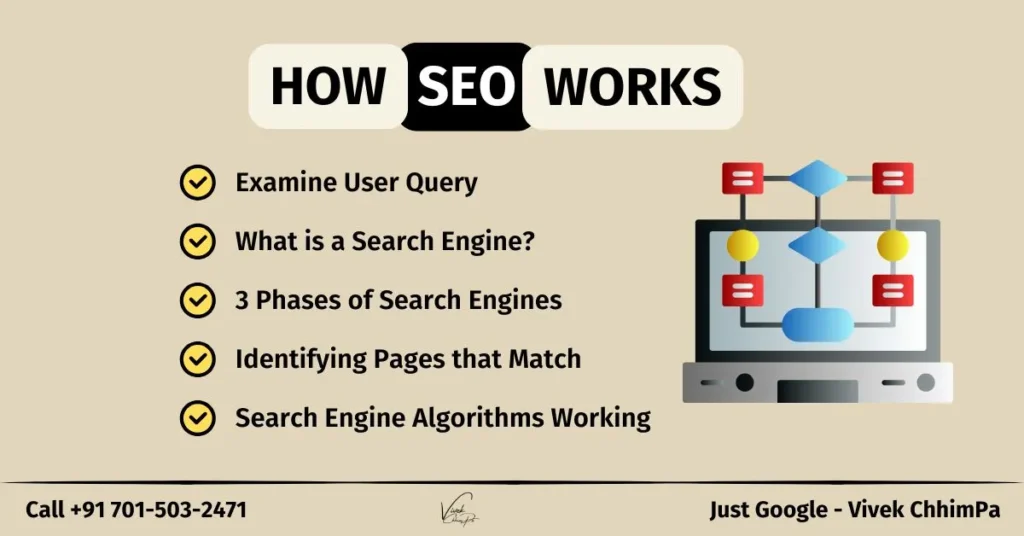
What is a Search Engine?
A search engine is a complex software program that scans the internet for websites that respond to users queries. The order in which the search results (SERPs) are displayed is determined by their significance and relevance to the user’s query.
Articles, videos, images, forum discussions, and social media posts are among the various kinds of content that modern search engines display in their results. With more than 91% of the market, Google is the most widely used search engine. Bing, DuckDuckGo, and others are next.
They consist of two primary components:
- Search Index: A digital repository of webpage information.
- Search Algorithms: The computer program or programs responsible for matching the search index results.
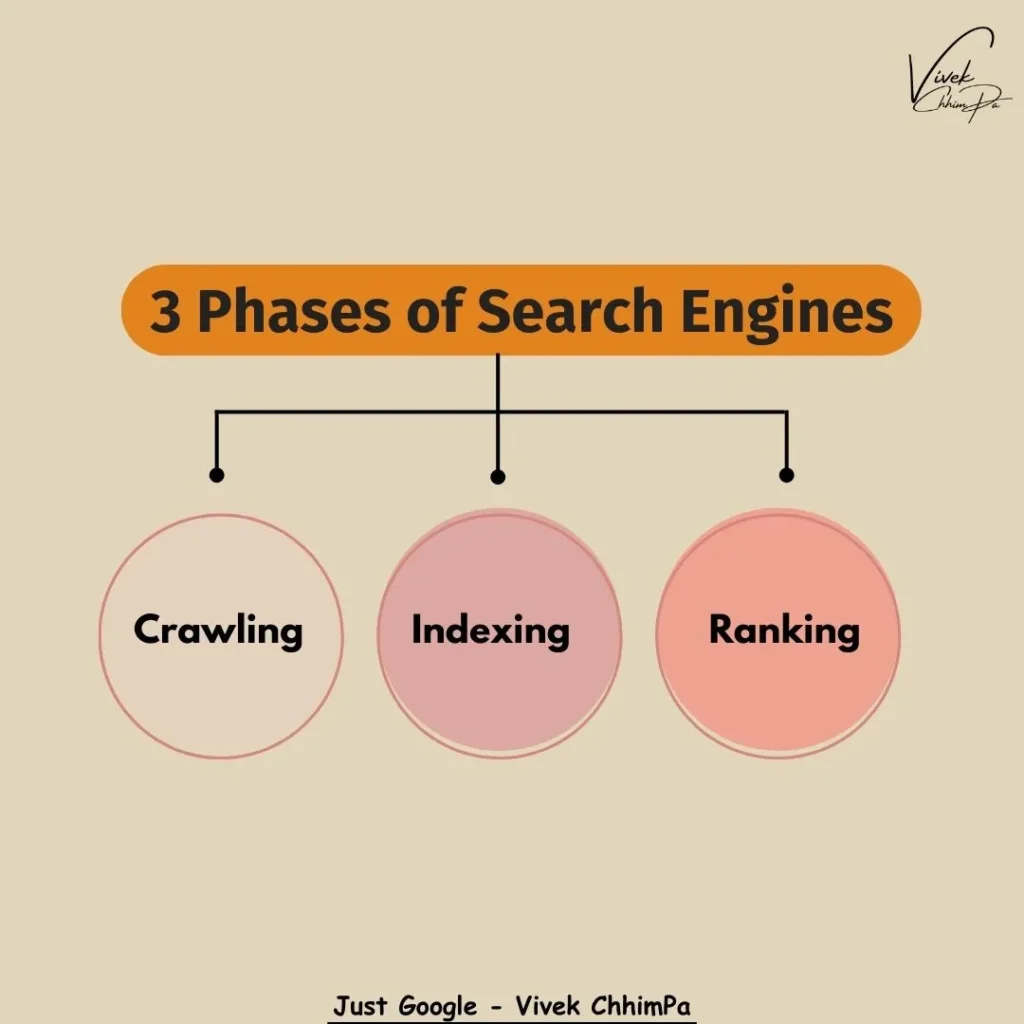
3 Phases of Search Engines
Web crawlers are used by search engines to scan publicly available webpages.
Web crawlers, often known as spiders or bots, are specialized programs that scan the web for new sites or updates to already-existing pages, then add this data to a search index.
There are 3 primary phases to this process:
- Sourcing the information is the first step.
- Organizing the data is the second step.
- Choosing which pages to display in a search query’s results and in what order is the third step.
This is commonly referred to as crawling, indexing, and ranking.
The Discovery Phase: Crawling
Search engines are looking for content that is publicly accessible on the Internet throughout the crawling process. This covers both fresh and updated content. They do this through a variety of software applications known as crawlers.
You only need to understand that crawlers’ purpose is to search the Internet for servers, also called webservers, that host websites to simplify a complex procedure.
They compile a list of every web server together with the number of websites each server hosts. They visit each website and implement various methods to determine the number of pages and content types (text, photos, videos, etc.) on each page.
Why Care About Crawling Process?
When optimizing your website for search engines, the first thing you should do is make sure they can access it correctly. If they can’t “read” your website, you shouldn’t expect much in the way of high ranks or search engine traffic.
As was already noted, crawlers have a lot of work to do, therefore you should try to make their job easier. There are a few things you can do to make sure crawlers can locate and access your website as fast and simply as feasible.
To ensure that crawlers can find and access your website as quickly and easily as possible, there are several things you can do.
- To indicate which pages of your website you don’t want crawlers to view, use Robots.txt. For instance, sites you don’t want to be publicly accessible on the Internet, such as your admin or backend pages.
- Large search engines like Google and Bing have tools (also known as Webmaster tools) that you can use to provide them with more details about your website, such as its structure and page count, so they won’t have to look it up on their own.
- List all of your website’s key pages in an XML sitemap so that crawlers know which pages to keep an eye out for changes.
- To tell search engine crawlers not to index a specific page, use the “noindex” element.
The Storing Phase: Indexing
Building a search engine requires more than just crawling. Before being made available to the end user, the information found by the crawlers must be arranged, sorted, and stored so that search engine algorithms can process it. We call this process indexing.
When a page is created or updated, its title and description, the type of content it contains, related keywords, incoming and outgoing links, and many other parameters required by their algorithms are all stored in search engines’ indexes, but not all of the information found on the page.
Why Indexing Process Important?
It’s really straightforward; your website won’t show up for any searches if it isn’t in their index. This also suggests that your chances of showing up in search results when someone types a query increase with the number of pages you have in the search engine indexes.
You must improve your website for search engines using a procedure known as Search Engine Optimization, or SEO for short, if you want it to show up in the top five spots of the SERPs (search engine results pages).
The Serving Phase: Ranking
Search engines choose which pages to display in the SERPS and in what order when a user forms a query in the third and last step of the process. Search engine ranking algorithms are used to do this, which is known as the ranking process.
To put it simply, they are programs that determine the best results for a search query by using a variety of rules. These guidelines and choices are based on the data found in their index.
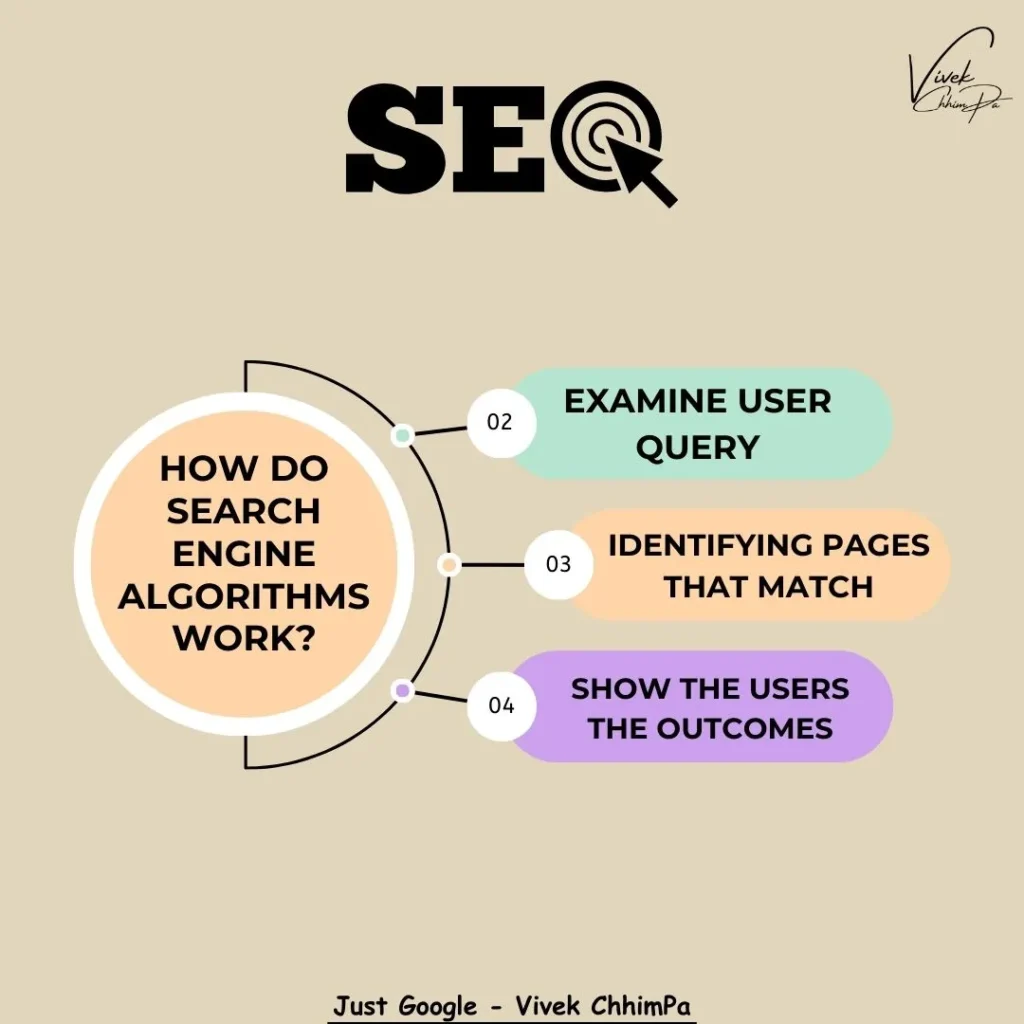
How Do Search Engine Algorithms Work?
To determine the best possible match for a user query, search engine algorithms evaluate a number of signals and criteria. This involves examining the content’s relevance to the user’s inputted terms, the page’s usability, the user’s location, what other users found helpful for the specific query, and a host of other variables.
AI and machine learning are used by search engines to make judgments based on criteria both inside and outside of a website’s content. Here is a streamlined explanation of how search engine ranking criteria operate for easy comprehension:
Step 1: Examine User Query
Search engines must first ascertain the type of information the user is seeking.
They perform this by breaking the user’s query (search phrases) into several significant keywords. A word with a particular meaning and function is called a keyword.
Step 2: Identifying Pages that Match
Examining their index to see which pages can offer the greatest response for a certain query is the second stage.
For both search engines and webmasters, this phase of the process is crucial. In order to maintain user satisfaction, search engines must provide the greatest results in the quickest amount of time. In order to receive traffic and visits, webmasters want their websites to be picked up.
These are the most important elements to help you understand how matching operates:
- Title and Content Relevancy: How pertinent are the page’s title and content to the user’s query?
- Content Types: photos, not text, will be included in the results if the user requests images.
- Content Quality: information must be comprehensive, helpful, and instructive, objective, and cover both sides of an issue.
- Website Quality: A website’s overall quality is important. Pages from websites that don’t match Google’s quality requirements won’t be displayed.
- Date of Publishing: Google takes into account the publication date in order to display the most recent results for queries pertaining to news.
- Page Language: Pages are presented to users in their native tongue, which isn’t usually English.
- Webpage Speed: Websites that load quickly, roughly 2 to 3 seconds, have a slight edge over those that load slowly.
- Device Type: Mobile-friendly sites are displayed to users who search on mobile devices.
- Location: When a user searches for “Italian restaurants in Ohio,” for example, local results are displayed.
Step 3: Show the users the outcomes
The search results are shown in an ordered list and are commonly referred to as the Search Engine Results Pages (SERPs). Depending on the type of query, SERP layouts frequently incorporate a variety of components, including knowledge graphs, rich snippets, organic listings, sponsored advertisements, and more.
For instance, a search for a local restaurant may result in a map with nearby locations, but a search for a certain news item may result in recent news items.